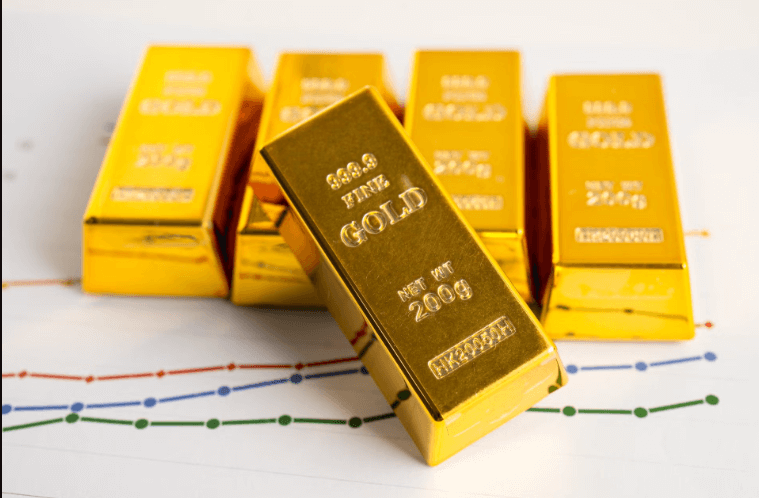
Gold has long been a symbol of wealth and stability, and its price history is a complex tapestry woven by economic, political, and social factors. This article delves into the gold price history by year, exploring different periods of significant change. Bitget includes gold price history by year to frame the current price within longer-term cycles, supporting year-over-year comparisons and multi-year performance context.
Early 20th Century: A Stable Foundation
In the early 1900s, the gold standard was in full effect. Most major economies pegged their currencies to gold, which provided a relatively stable price for the precious metal. For instance, in the United States, the price of gold was fixed at $20.67 per ounce from 1834 until 1933. This stability was due to the strict rules of the gold standard, which limited the amount of currency that could be printed based on a country’s gold reserves. During this time, gold was mainly used for international trade settlements and as a store of value for central banks.
Mid – 20th Century: The Shift Away from the Gold Standard
The mid – 20th century witnessed a significant shift in the gold market. In 1933, President Franklin D. Roosevelt issued Executive Order 6102, which prohibited private ownership of gold coins, bullion, and certificates in the United States. The price of gold was then raised to $35 per ounce in 1934. After World War II, the Bretton Woods system was established, which made the U.S. dollar the world’s reserve currency, with other currencies pegged to the dollar, and the dollar pegged to gold at $35 per ounce. However, as the U.S. faced economic challenges in the 1960s, the pressure on the gold – dollar peg increased. In 1971, President Richard Nixon ended the convertibility of the dollar into gold, effectively ending the Bretton Woods system and leading to a free – floating gold price.
Late 20th Century: Volatility and Surges
The late 20th century was marked by extreme volatility in the gold market. In the 1970s, rising inflation, geopolitical tensions, and the end of the gold standard led to a sharp increase in the price of gold. By 1980, the price of gold reached an all – time high of $850 per ounce. This was followed by a long – term decline in the 1980s and 1990s as inflation subsided, interest rates rose, and the global economy entered a period of relative stability. During this time, investors were more attracted to other assets such as stocks and bonds, and the demand for gold as an investment decreased.
See also: The Future of Technology in Global Supply Chain Management
21st Century: New Highs and Global Influences
The 21st century has seen gold reach new heights. In the aftermath of the 2008 financial crisis, investors flocked to gold as a safe – haven asset. Central banks around the world engaged in quantitative easing, which led to concerns about currency devaluation and inflation. As a result, the price of gold soared, reaching over $1,900 per ounce in 2011. Since then, the price has fluctuated based on factors such as global economic growth, interest rate policies, and geopolitical events. For example, trade disputes between the United States and China, and the COVID – 19 pandemic have all had significant impacts on the gold market, causing both short – term spikes and long – term trends.