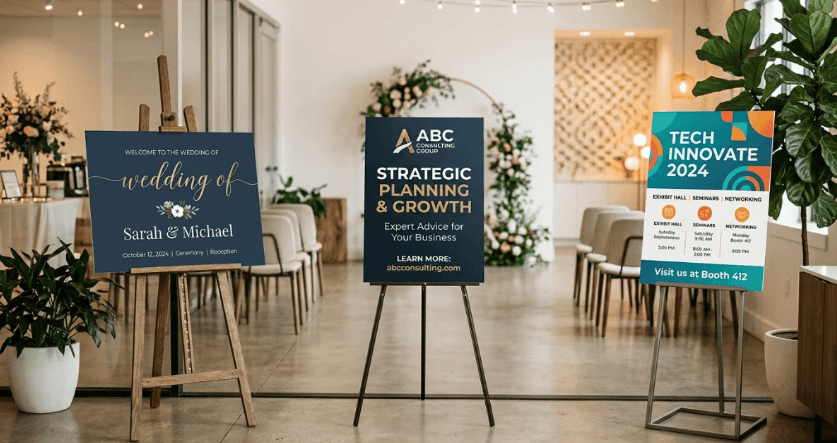
Whether you’re exhibiting at a busy trade show, hosting a corporate conference, or organising a product launch, the signage you choose can make a big difference to how people experience your event. Good signage does more than display your company logo. It helps people find their way around, attracts attention and gives your business a professional, memorable presence.
However, getting it right takes a little planning. From choosing suitable materials to deciding where everything should go, here are some important things to consider when organising signage for your next business event.
Think About What You Want Your Signage To Achieve
Before getting carried away with colours, fonts and designs, think about what you actually need your signage to do. Are you hoping to attract visitors to your exhibition stand, promote a new product or simply help guests navigate the venue?
Different objectives call for different approaches. A large, eye-catching banner might work brilliantly for attracting attention across a busy exhibition hall, while smaller directional signs are more useful for guiding visitors towards specific areas.
Having a clear purpose for each sign will help you avoid unnecessary spending and make your event feel more organised.
Consider Your Venue And Available Space
The layout of your venue should influence almost every signage decision you make. Something that looks impressive in a design mock-up might not work quite as well when placed in a crowded room.
Think about where people will enter, which routes they’ll take, and where they’re most likely to stop. You’ll also want to consider ceiling heights, lighting and any restrictions on attaching signage to walls or other surfaces.
If you’re attending an exhibition, check the organiser’s guidelines before ordering anything. There may be specific rules around stand dimensions, installation methods and permitted materials.
Pick Materials That Suit Your Event
Not all signage materials are suitable for every setting, so it’s worth considering how and where your graphics will be displayed.
For outdoor events, you’ll need materials capable of handling changing weather conditions. Indoor exhibitions, meanwhile, offer more flexibility, with options including fabric displays, printed boards and flexible banners.
It’s also worth thinking about sustainability and whether your signage can be reused at future events. Businesses that are looking into different printing materials and display solutions can look towards suppliers such as Soyang Europe when planning their event graphics.
See also: A Strategic Guide to Academic and Professional Success in Computing
Keep Your Messaging Clear And Easy To Read
It can be tempting to squeeze as much information as possible onto a banner, especially when you’re paying for the printing. Unfortunately, too much text can make signage difficult to read.
Focus on communicating one clear message at a time. Use bold headings, readable fonts, and colours that provide enough contrast. Remember that visitors may only glance at your signage for a few seconds, particularly at busy exhibitions. Make those seconds count by prioritising the information that matters most.
Plan For Installation And Removal
Finally, don’t overlook the practical side of getting your signage into position. Consider how it will be transported, who will install it, and how much time you’ll have to set everything up. Reusable displays should also be easy to dismantle and store without damage.
A little preparation can save considerable stress on the day, leaving you free to concentrate on meeting visitors, building connections and making your event a success.